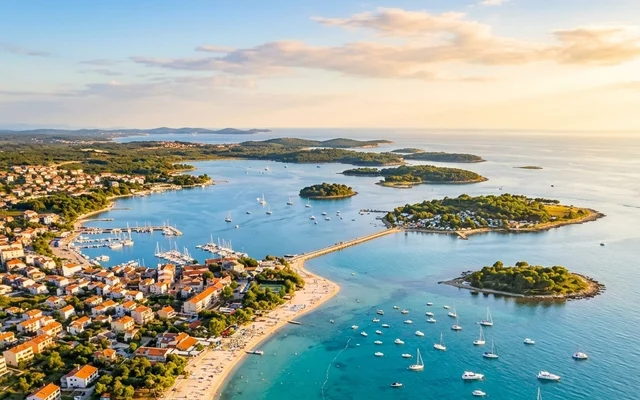
In short: Istria offers historic towns (Rovinj, Poreč, Pula), pebble beaches, the Brijuni national park and outstanding cuisine with truffles and olive oil — the largest peninsula on the Adriatic.
Istria is the largest peninsula on the Adriatic and, for years, one of the favourite destinations of travellers from Serbia. Clear sea, varied beaches, medieval hill towns, olive groves and vineyards in the hinterland — all of it less than a single night’s drive from Belgrade. In this guide to Istria holidays 2026 we go through the loveliest towns and places, the beaches, recommendations for families and couples, and everything you need to know about the journey, including the door-to-door minibus transfer from Belgrade to Istria — with Belgrade as the starting point for travellers from across Serbia.
Istria rewards families with children and couples alike. The north and west of the peninsula offer calm family resorts with a shallow entry into the sea, while the south and east hide wild coves and romantic old towns. Thanks to the variety of accommodation and things to do, both those seeking a quiet break and those after lively fun will enjoy it here.
The loveliest towns and places in Istria
Istria has eleven places we cover directly from Belgrade — from the far north to the south and the eastern coast. Here is a short overview, with links to the details and prices for each place.
- Umag (Belgrade to Umag transfer) — Istria’s northernmost town, known for its ATP tennis tournament and a long seafront promenade along the marina. The hinterland is dotted with vineyards and olive groves.
- Novigrad (Belgrade to Novigrad transfer) — a picturesque fishing town with medieval walls, a calm shore and restaurants renowned for their seafood.
- Poreč (Belgrade to Poreč transfer) — a town with two thousand years of history, its symbol the Euphrasian Basilica, on the UNESCO World Heritage List since 1997; the famous Plava Laguna resort lies nearby.
- Funtana (Belgrade to Funtana transfer) — a quiet resort between Poreč and Vrsar, with a marina, a promenade and pine-shaded beaches, ideal for a family holiday.
- Vrsar (Belgrade to Vrsar transfer) — a town on a hill above the Lim Bay, with an idyllic archipelago of islets and an old core some fifty metres above the sea.
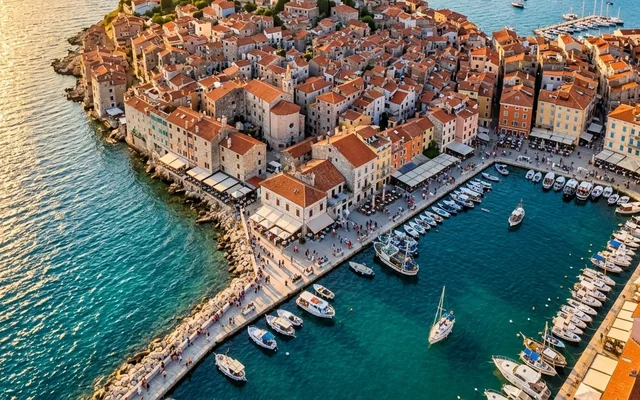
- Rovinj (Belgrade to Rovinj transfer) — the most romantic town in Istria, its Church of St Euphemia with a bell tower 62 m high (the tallest in Istria) rising above the old harbour; narrow lanes, the island of St Catherine and the Zlatni Rt forest park complete the picture.
- Fažana (Belgrade to Fažana transfer) — the gateway to the Brijuni (Brioni) National Park, with a fishing promenade, calm beaches and a well-known sardine festival.
- Pula (Belgrade to Pula transfer) — the largest town in Istria, with the Roman Arena from the 1st century — one of the six largest and best-preserved Roman amphitheatres in the world, once holding around 23,000 spectators — the Arch of the Sergii and the beaches of Verudela.
- Medulin (Belgrade to Medulin transfer) — at the very south of Istria, with the sandy Bijeca beach, the Kašteja peninsula and a rich choice of water sports.
- Premantura (Belgrade to Premantura transfer) — the gateway to Cape Kamenjak, the southernmost point of Istria, with wild rocky beaches and conditions for kitesurfing and windsurfing.
- Rabac (Belgrade to Rabac transfer) — the “pearl of the Kvarner” on the eastern coast, with white pebble beaches, a seafront promenade and the nearby old town of Labin.
You will find a complete overview of all the places and prices on the Belgrade to Istria minibus transfer page. For each place we have also prepared a detailed guide with beaches, sights and excursions — what to see in Pula, Rovinj, Poreč, Umag, Novigrad, Funtana, Vrsar, Fažana, Medulin, Premantura and Rabac.
Beaches in Istria
The beaches of Istria are varied, so everyone finds their kind of shore. There are fewer sandy beaches than in Greece, but what does exist is highly sought after: the finest example is Bijeca beach in Medulin, with fine sand and a shallow entry into the sea, perfect for families with children.
Most of Istria is made up of pebble and rocky beaches with crystal-clear sea. The white pebble beaches in Rabac and the coves around Rovinj, Vrsar and Poreč are ideal for those who love clean, transparent water and pleasant seaside walks. Lovers of untouched nature will head for Cape Kamenjak near Premantura — a wild protected area with rocky coves, hidden beaches and excellent conditions for diving and windsurfing. Istria is also among the leading Croatian regions for the Blue Flag — in 2025, 43 beaches and 6 marinas were awarded one.
Istria with children and for couples
For families with children, the best choices are calm spots with shallow water. First among them are Medulin with its sandy Bijeca, then Fažana and Funtana — places where children swim easily and safely while parents have everything they need close at hand. The wider area around Poreč, with its well-kept beaches and entertainment, also suits families.
Couples will enjoy the atmosphere of the old towns. Rovinj is by far the most romantic choice — an evening walk through the narrow lanes up to the Church of St Euphemia and the sunset over the harbour stay in the memory. Romance is also found in Vrsar above the Lim Bay, and in the stone core of Poreč.
How to get to Istria — minibus transfer from Belgrade
The most comfortable option for a minibus transfer from Belgrade to Istria is the door-to-door ride: we pick you up at your address in Belgrade and drop you off directly in front of your accommodation, with no changeovers and no carrying cases to stations. Departure is at night, at 23:00h, so you sleep through most of the journey and reach the coast in the morning — just in time for your first day on the beach.
The route runs via the Batrovci – Bajakovo border crossing, then along the motorway through Zagreb and Rijeka (Belgrade to Rijeka transfer) to the western coast of Istria. The journey takes about 7–8 hours, depending on the particular town and queues at the border. The distance is around 615–665 km, depending on whether you are travelling to Rabac in the east, the towns of the western coast, or south towards Medulin and Premantura.
The vehicles are modern, air-conditioned and fitted with WiFi, and the drivers are experienced on this route. Prices start from €85 one way per person and depend on the destination. See the details on the Belgrade to Istria minibus transfer page or in the price list — for example, the price for Pula or the price for Rovinj. This kind of passenger transfer is more flexible than the bus and free of the stress of driving and parking yourself.
Food and practical tips
Istrian cuisine is one of the reasons you keep coming back. The region is world-famous for its truffles from the Motovun forest, top-quality olive oil and fine wines (Malvazija, Teran). Be sure to try fuži too — the local Istrian pasta, most often served with truffles or game.
A few practical tips: the main season runs from June to September, and it is hottest and busiest in July and August; anyone wanting a quieter break and lower accommodation prices should aim for June or September. To cross the border at Batrovci – Bajakovo you need a valid biometric passport — Croatia is in the Schengen Area, so an ID card is not enough; from April 2026 the EU EES system also operates on entry to Schengen (a first crossing with a photo and fingerprints), which we cover in more detail in the guide documents for the coast. The currency in Croatia is the euro, so there is no need to change money. It is best to book the minibus early, as seats fill up quickly in season.
Frequently asked questions
How long is the Belgrade – Istria journey by minibus?
The journey takes about 7–8 hours, depending on the town in Istria and queues at the border. Thanks to the night departure at 23:00h, you sleep through most of the drive and arrive in the morning.
How much does the minibus to Istria cost?
Prices start from €85 one way per person and depend on the destination. Check the exact price for your town on the destination page or in the price list.
Which Istrian beach is best for small children?
The sandy Bijeca beach in Medulin, with a shallow entry into the sea. The calm beaches in Fažana and Funtana are also excellent for families with the youngest.
When is the best time for a holiday in Istria?
The main season runs from June to September. July and August are the hottest and busiest, while June and September offer pleasant temperatures, cleaner sea and lower accommodation prices.
How many beaches in Istria have a Blue Flag?
In 2025, Istria was awarded 43 beaches and 6 marinas with a Blue Flag — among the towns with the most awards are Poreč, Rovinj and Medulin. It is a mark of proven quality and clean sea.